
Parenting doesn’t come with a manual.
We say that all the time. Usually when we’re exhausted, second-guessing ourselves, or trying to laugh our way through whatever new phase our child has thrown at us.
But if parenting doesn’t come with a manual, why do we sometimes treat developmental milestones, age-based recommendations, and parenting guidelines like one?
Developmental milestones. Age-based recommendations. Pediatric guidance. Speech and language expectations. Sleep recommendations. Feeding advice. The list goes on.
These things exist for a reason. They can help us understand our children’s development, recognize when something may need additional attention, and give us a starting point when we have no idea what we’re doing.
The problem isn’t that the guidelines exist.
The problem is what we sometimes turn them into.
Somewhere between receiving the information and applying it to our children, “Many children are doing this around this age” becomes “My child should be doing this by this age.”
Those are not the same statement.
And when we forget that, guidance can quietly become a deadline.
When Guidance Starts Feeling Like a Grade
I learned this in a very real way with my son.
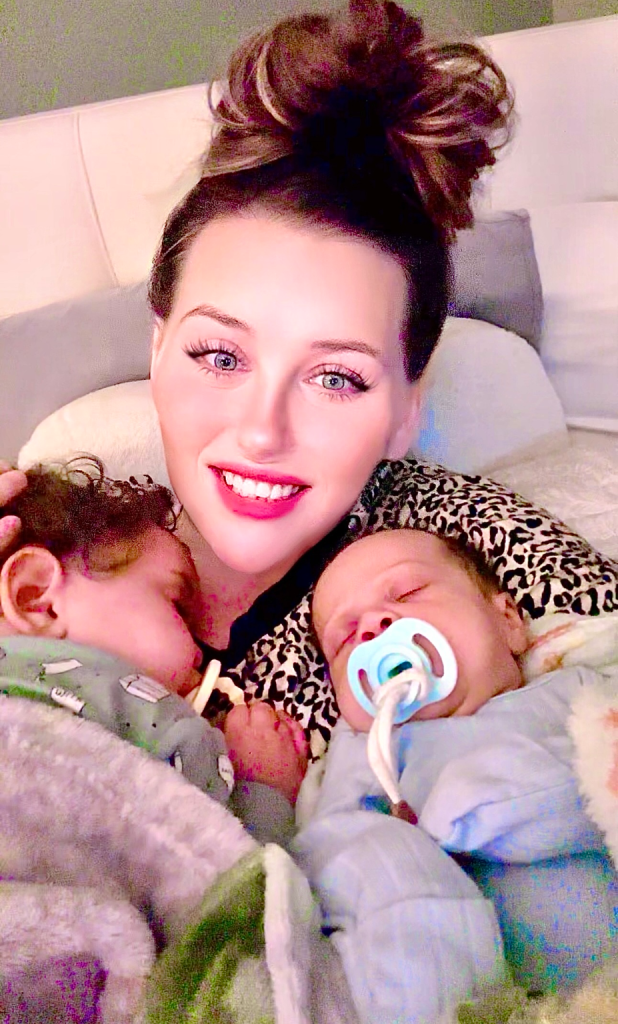
My son kept his pacifier longer than what is generally recommended. It was something that worked for him, and like most parenting decisions, it wasn’t something I made while sitting down with every possible piece of research spread across a table in front of me.
I was parenting the child I had in front of me.
Later, as we were addressing delays in his speech and language development through early-intervention services, one of his therapists brought up his prolonged pacifier use. The explanation given to me was that having the pacifier in his mouth for so long may have limited some of the movement and practice of his mouth and tongue, potentially contributing to some of the difficulties he was having with speech.
And do you know how easy it would have been to hear that as:
I did this.
I caused this.
I failed my child.
That’s the part we don’t talk about enough.
Because when you’re a mother and someone tells you that a decision you made may have contributed to something your child is struggling with, your brain doesn’t always politely file that information under Possible Contributing Factors to Investigate Further.
Sometimes it files it under Evidence That I Screwed Up My Kid.
But then I asked another therapist about it.
She didn’t completely agree with the first therapist’s explanation. She agreed that he was older than generally recommended for pacifier use, but she didn’t necessarily agree that the pacifier explained his speech difficulties in the same way.
Same child.
Same pacifier.
Professionals with different interpretations.
That didn’t make either person’s input worthless.
It reminded me that guidance, professional knowledge, research, parental observation, and the individual child all have a place in the conversation.
And maybe that’s what we’ve been missing.
A Guideline Is Information. It Is Not a Verdict.
There is an enormous difference between saying:
“Many children reach this milestone around this age.”
and:
“Your child must reach this milestone by this age.”
One gives you information.
The other gives you a deadline.
And once we create a deadline, suddenly there’s a way to be late.
Now a child isn’t simply developing differently. They’re “behind.”
A mother isn’t simply learning something new. She’s wondering what she did wrong.
And a recommendation that was supposed to provide useful information has somehow become a measuring stick for both the child and the parent.
That doesn’t mean we should ignore developmental milestones or professional recommendations.
Quite the opposite.
Sometimes noticing that a child is significantly outside an expected developmental range can be incredibly important. It can lead a parent to ask questions, speak with a pediatrician, seek an evaluation, access early intervention, or discover support their child genuinely needs.
The problem isn’t noticing.
The problem is deciding what it means before we’ve asked enough questions.
Instead of:
They’re behind. Something is wrong. I did something wrong. I need to make them catch up.
What if we tried:
They’re not doing this yet. What else am I noticing? What can I learn? Is there something I should ask about?
That’s not ignoring a guideline.
That’s actually using it.
Curiosity Will Teach You More Than Shame Ever Could
There is something incredibly powerful about changing “What’s wrong?” into “I wonder why?”
Maybe your child simply needs more time.
Maybe their temperament affects how they approach something.
Maybe one skill developed quickly while another is taking longer.
Maybe there is an underlying developmental, sensory, speech, behavioral, physical, or medical issue worth discussing with a qualified professional.
Maybe another behavior you thought was completely unrelated suddenly becomes relevant once you start learning more.
You don’t know until you start asking questions.
And sometimes another parent’s experience gives you the question you didn’t even know you needed to ask.
That’s where I think we’ve underestimated one of the greatest resources parents have:
each other.
Not as replacements for pediatricians, therapists, specialists, research, or evidence.
As another source of experience.
Another perspective.
Another possibility.
You Cannot Use Today’s Knowledge to Punish Yesterday’s Version of Yourself
This may be one of the most important things I’ve learned through parenting:
Learning that you could have done something differently does not automatically mean you failed your child.
Sometimes it simply means you know something today that you didn’t know yesterday.
There is a phrase we hear constantly:
When you know better, you do better.
But sometimes we weaponize even that against ourselves.
We look backward with today’s knowledge and judge yesterday’s decisions as though we had access to all of this information then.
We didn’t.
You cannot use today’s knowledge to punish yesterday’s version of yourself for not having it yet.
Give yourself some grace.
That doesn’t mean refusing accountability. It doesn’t mean deciding that nothing matters because “I didn’t know.”
It means being able to say:
I made the best decision I knew how to make with the information I had at the time. Now I have more information. What can I do with it?
That’s growth.
That’s parenting.
And maybe parenting never came with a universal manual because there was never going to be a universal child.
The Pressure Doesn’t Stop With Us
Unfortunately, the pressure doesn’t stop inside our own homes.
We do it to each other.
We see another parent doing something differently and immediately start measuring their decision against our own.
Why is she still letting her child do that?
Why hasn’t she stopped that yet?
My child was doing that months ago.
I would never.
Sometimes there may be a legitimate safety or developmental concern worth addressing. But sometimes what we’re witnessing isn’t bad parenting.
It’s simply different parenting for a different child.
We don’t know that child’s entire history.
We don’t know their temperament.
We don’t know their sensory needs.
We don’t know what the family has already tried.
We don’t know what their pediatrician or therapist has recommended.
We don’t know what happened yesterday, last month, or over the last three years.
A parenting choice being different from yours does not automatically make it wrong.
And understanding that doesn’t require agreement.
You can understand why another parent made a decision and still decide that you would make a completely different one for your child.
Understanding is not agreement.
It’s simply leaving enough room in your thinking to recognize that your experience is not the only experience that exists.
Maybe We’ve Been Taught to Treat Different as Wrong
This is where I think the problem gets even bigger.
When generalized guidance gets treated as a universal rule, it doesn’t only create pressure.
It can create sides.
Parents who follow something one way.
Parents who approach it another way.
And eventually, instead of exchanging information, we’re defending ourselves from each other.
Guidance becomes expectation —> Expectation becomes pressure —> Pressure becomes judgment—> Judgment becomes division.
Whether anyone intended for that to happen isn’t really the point.
The effect is what matters.
Something designed to help parents can become another reason for parents to question, shame, and separate themselves from one another.
And meanwhile, the person we’re all supposedly trying to help gets lost in the argument:
the child.
Maybe the problem isn’t that parents are choosing differently. Maybe the problem is that we’ve been taught to treat different as wrong.
What If We Stopped Trying to Win at Parenting?
Imagine what could happen if parents approached each other differently.
Instead of:
“You shouldn’t be doing that.”
What if it were:
“My child went through something similar. This is what helped us. Maybe it’s something you could look into.”
No superiority.
No diagnosis.
No assumption that because something worked for one child, it must work for another.
Just information.
One parent may be struggling with something for months. She’s exhausted every idea she has. Maybe she doesn’t have access to the same resources someone else does. Maybe she doesn’t even know what terminology to search for.
Then another parent shares something she learned from her own child.
Maybe it works.
Maybe it doesn’t.
Maybe it leads the first parent to do her own research.
Maybe that research makes her notice something else.
Maybe she brings that information to her child’s pediatrician.
Maybe the pediatrician recognizes a pattern and recommends an evaluation.
Maybe the evaluation identifies something.
Or maybe everyone discovers that the child simply needed more time.
The other parent didn’t have to provide the answer.
Sometimes she simply provides another possibility.
And then something incredible happens.
That parent learns something new from her own child.
One day, she encounters another parent struggling with something similar.
And she passes it forward.
Maybe Our Differences Are the Answer
Every child is different.
We say that constantly, too.
And yet we keep looking for one universal way to parent them.
Maybe that’s the contradiction we need to stop trying to solve.
Because the answer to every child being different was never going to be finding one guideline that perfectly fits every child.
Maybe their differences are exactly what can expand our collective knowledge.

One child teaches one parent something.
Another child teaches another parent something completely different.
Those parents share what they’ve learned—not as commandments, not as proof that they did parenting “right,” but as possibilities.
Now we have two experiences instead of one.
Then ten.
Then hundreds.
Then thousands.
The universality isn’t in finding one answer that works for every child. It’s in creating access to enough different experiences that parents have more possibilities to explore for the child standing in front of them.
Professional guidance still matters.
Research still matters.
Pediatricians, therapists, specialists, and developmental professionals still matter.
And so does the parent who spends every day learning the individual child those professionals may only see for an appointment at a time.
None of those things have to compete.
They can work together.
My Son Taught Me Something. Now I’m Passing It to You.
I started with a pacifier.
A parenting decision.
A recommendation.
A speech delay.
And two professionals who didn’t interpret the situation exactly the same way.
But what my son ultimately taught me was much bigger than whether I should have taken his pacifier away sooner.
He taught me to ask questions.
He taught me to listen to professional guidance without turning every recommendation into a verdict on my parenting.
He taught me that learning something new doesn’t require me to hate the mother I was before I learned it.
And he reminded me that the guideline never knew my individual child.
It couldn’t.
That’s not what guidelines are designed to do.
My child didn’t break the guideline. He taught me why it was never supposed to become a rule.
And now I’m sharing what he taught me with you.
Not because my experience should become your new rule.
Not because what worked—or didn’t work—for my child will necessarily be the answer for yours.
But because maybe something in our experience gives you another question to ask.
Another possibility to explore.
Or maybe it simply gives you permission to stop looking at your child’s differences as evidence that you’re failing.
And then maybe your child will teach you something mine never could.
Maybe one day you’ll pass that knowledge to another parent.
And she’ll learn something from her child and pass it forward again.
Imagine what we could uncover if parents stopped approaching each other from a place of judgment and started approaching each other with curiosity. Imagine how many exhausted parents could hear one new possibility they hadn’t considered. Imagine how much knowledge could move between us if nobody had to defend themselves before they were allowed to learn.
Maybe parenting was never supposed to be a competition over who followed the guidelines best.
Maybe we’re supposed to learn from the guidance.
Learn from the professionals.
Learn from our children.
And learn from each other.
Because every child being different was never the problem.
Maybe our willingness to learn from those differences is exactly what we’ve been missing.





Leave a Reply